VITICULTURE · CONCA DE BARBERÀ · HARVEST 2026
Martí Magrinyà: “The 2026 wines will be good, but the heat has left its mark on the vines”
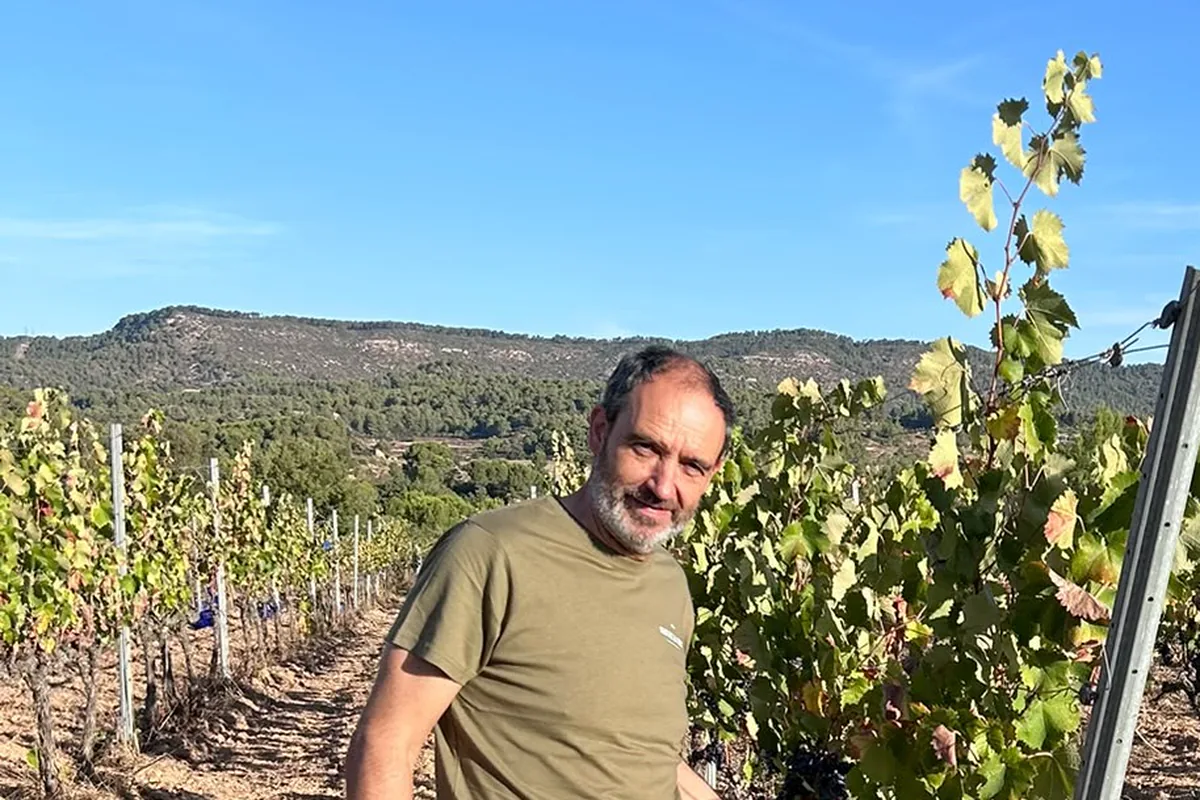
The oenologist looks at a harvest shaped by extreme temperatures and earlier grape ripening. Despite the effects of the heat, he expects wines with body, volume and ripeness, especially the reds, and warns of the consequences of climate change for dry-farmed viticulture in Conca de Barberà.
The 2026 harvest is already history and, as happens almost every year, the wine sector is again talking about an exceptional crop. But how far can a vintage keep being called exceptional when that phrase is repeated systematically? It is one of the reflections raised by Martí Magrinyà, oenologist at Celler Mas de la Creu, in l’Espluga de Francolí, as he takes stock of this year’s campaign.
With a critical eye, the product of experience and of knowing the place, Magrinyà questions some of the sector’s usual arguments, but he recognises that this time there are reasons to speak of exception. Not so much for the quality of the wine as for the weather that accompanied the vine’s growing cycle and for the earlier ripening calendar.
His analysis holds two realities that seem to contradict each other: vineyards subjected to ever more intense heat, and wines that nonetheless promise notable quality.
A historically hot summer
Magrinyà’s observations about the heat in the vineyards are clearly reflected in the official weather data.
According to the Servei Meteorològic de Catalunya, the summer of 2026 was the hottest on record in the country, ahead of 2022, 2003 and 2025, which had already reached extraordinary values. Across more than 80% of Catalonia, the average temperature for June, July and August was at least 3 °C above the 1991–2020 climate reference.
July was especially significant: it was the hottest in the Catalan historical series, with anomalies of more than five degrees in some areas. The heat did not end with August either. September broke records again and became the hottest on record in Catalonia, with an exceptional spell between the 1st and the 8th.
For Magrinyà, this build-up of heat explains much of how the vineyards behaved during the campaign.
After a cold January, February and March brought milder temperatures and, from spring onwards, heat became the main protagonist. The extreme spells of July, August and even September put the plants through conditions the oenologist describes as almost infernal.
Even so, Magrinyà stresses the surprising resilience of the vines. A trait that still amazes professionals who, like him, have worked with vines and wine for years.
In Conca de Barberà that resilience matters especially. A large part of the vineyard is dry-farmed and depends on the water the plant can draw from the soil. Persistently high temperatures increase water stress and can shape both the quantity of grapes produced and their oenological character.
Less aromatic wines, but with more structure
Despite the difficulties of the campaign, the qualitative assessment made by the oenologist at Celler Mas de la Creu is positive.
From the first tastings of the newly made wines, Magrinyà considers that the 2026 vintage may offer better results than 2025, above all in the case of the reds.
The heat, though, will have left a characteristic mark on the profile of the wines.
As he explains, the high temperatures during ripening have harmed their aromatic expression. He therefore expects wines of more discreet aromatic intensity, but with taste qualities that particularly stand out.
On the palate, the first tastings show ripe, broad, dense and expressive wines, with body and volume. Magrinyà also stresses their roundness, a character he attributes in large part to the ripeness of the grapes themselves, beyond whatever the oenologist may do during vinification.
This combination of lower aromatic intensity and greater structure could become one of the distinctive traits of the 2026 wines, although their evolution and ageing will have to be waited on before a definitive judgement can be made.
Wine quality is not the exclusive preserve of cool climates
The experience of this harvest also leads Magrinyà to question some of the principles that shaped the training of several generations of oenologists.
He recalls that, during his years of study in Tarragona, the teaching of oenology was strongly influenced by French models, which linked great wines to the conditions of cool climates.
The reality of Mediterranean viticulture, though, has been showing that quality does not depend exclusively on that factor.
Current knowledge of vine growing, varieties, place and winemaking techniques makes it possible to produce wines of high quality in very different climates.
The 2026 harvest is, according to Magrinyà, a further example. Even though it unfolded under exceptional temperatures, the first results point to a vintage of good quality.
That does not mean, however, that extreme temperatures are beneficial for the vine. Excessive heat can compromise acidity, aromatic compounds and the balance of the grapes, even if certain ripening conditions favour the concentration and structure of the wines.
Conca de Barberà facing the climate challenge
Beyond the sensory character of the crop, Magrinyà’s main concern is the future of viticulture in a context of global warming.
The oenologist focuses in particular on dry-farmed vineyards, predominant in Conca de Barberà and widespread across the counties of Tarragona.
These vineyards are especially sensitive to the combination of persistent heat, spells of drought and irregular rainfall. The vines’ natural capacity to adapt lets them withstand adverse conditions, but it also has limits.
A sustained rise in temperatures can keep accelerating ripening dates and force viticultural practice to adapt. The orientation of plantings, protecting the grapes from solar radiation, managing the cover crop and conserving soil moisture are some of the aspects that are gaining importance.
But for Magrinyà the problem goes far beyond the adaptations each grower can make individually.
His closing reflection criticises the distance that often separates institutional talk of sustainability from the concrete actions of governments. He considers the climate emergency a real threat, and that facing it requires changes of substance, both in habits of consumption and in public policy.
The paradox of still being able to go to the beach after harvest
True to his ironic tone, Magrinyà ends up finding a small advantage in the middle of this worrying picture.
Traditionally, the arrival of the harvest also marked the end of summer. When oenologists finished the intense weeks of work in the cellar, temperatures had already started to fall and the fine weather was over until the following year.
Now, with summers that seem to stretch further every year, it is still possible to finish the harvest and go on enjoying days at the beach.
It is a paradox the oenologist offers with humour, but it sums up the contradictions of the present situation.
The 2026 harvest will probably leave good wines, especially ripe, structured reds with volume. But it will also leave the memory of vineyards forced to withstand extraordinary heat.
The challenge, in the years ahead, will not only be to keep making good wines, but to make it possible for the vineyards to keep producing them in an ever more demanding climate.
And perhaps, as Magrinyà suggests, we should start wishing that the coming summers were a little less exceptional.
Sources and weather data
The figures that frame this article come from the official publications of the Servei Meteorològic de Catalunya, in particular the summer summary published on 19 October 2026.
Sommelier Takeaway
Trepat is not a fleeting trend: it is the Mediterranean answer to the global quest for finesse, drinkability, and pristine terroir.